
**High-Speed Data Acquisition System Design Using the AD9235BRUZ-20 12-Bit ADC**
The design of high-speed data acquisition (DAQ) systems is critical in applications such as communications, medical imaging, radar, and scientific instrumentation. These systems require the ability to accurately capture and digitize analog signals with high fidelity and minimal noise. At the heart of such systems lies the analog-to-digital converter (ADC), a component whose performance directly dictates the overall capability of the DAQ chain. The **AD9235BRUZ-20**, a 12-bit, 20 MSPS ADC from Analog Devices, presents a compelling solution for designers seeking to balance high speed, resolution, and power efficiency.
**System Architecture and Key Considerations**
A typical high-speed DAQ system using the AD9235 involves several critical stages beyond the ADC itself. The signal path usually begins with a sensor or an RF front-end, followed by a conditioning circuit, the ADC, and finally an FPGA or microcontroller for data processing and transmission.
The **front-end analog conditioning circuitry is paramount**. It must prepare the incoming signal for optimal digitization. This often involves amplification to maximize the use of the ADC's input range and anti-aliasing filtering to remove out-of-band noise. A high-performance differential amplifier, such as the ADA4932, is frequently used to drive the AD9235's differential inputs. This configuration helps reject common-mode noise, a significant advantage in electrically noisy environments. The anti-aliasing filter, typically a low-pass active filter, must have a flat passband and a sharp roll-off at the Nyquist frequency (10 MHz for a 20 MSPS system) to prevent higher-frequency signals from distorting the digitized data.
**Leveraging the AD9235BRUZ-20's Capabilities**
The **AD9235BRUZ-20 is a cornerstone of this design**, offering a sample rate of 20 million samples per second (MSPS) with 12-bit resolution. Its key specifications make it suitable for demanding applications. It features excellent dynamic performance, including a **typical signal-to-noise ratio (SNR) of 70 dB** and spurious-free dynamic range (SFDR) of 85 dB at 10 MHz input, ensuring that both large and small signals are digitized with clarity and minimal distortion.
Its differential input structure is crucial for maintaining signal integrity in high-speed layouts. Furthermore, the ADC integrates a sample-and-hold amplifier and a voltage reference, simplifying the external component count. Power consumption is a critical factor in modern systems, and the AD9235 addresses this by consuming a modest 58 mW at 20 MSPS, making it suitable for portable or power-sensitive applications.
**PCB Layout and Digital Interface**
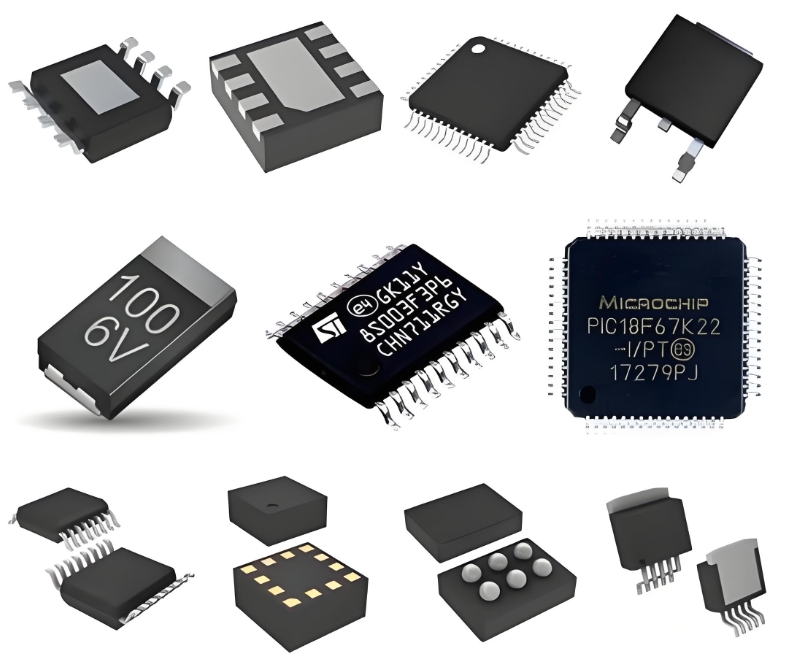
Achieving the specified performance of the AD9235 is heavily dependent on meticulous printed circuit board (PCB) design. A **multilayer PCB with dedicated ground and power planes is essential** for providing low-impedance return paths and minimizing noise. The analog and digital sections should be partitioned, and the ADC should be straddled across these partitions. Bypass capacitors must be placed as close as possible to the ADC's power pins to filter high-frequency noise.
The digital output interface uses a parallel CMOS/LVDS format. For a 20 MSPS data rate, careful routing of the 12 data lines and the data clock (DCO) is necessary to avoid skew and ensure synchronous data capture by the receiving device, usually an FPGA. The FPGA is responsible for latching the data, often deploying a first-in-first-out (FIFO) buffer to process or transmit the data stream without loss.
**Conclusion and Verification**
A successful design culminates in thorough testing. Using a high-precision signal generator, engineers must characterize the system's performance by measuring key parameters like SNR, SFDR, effective number of bits (ENOB), and integral/differential non-linearity (INL/DNL). This validation ensures the system meets its required specifications and that the ADC is performing as per its datasheet.
ICGOOODFIND: The AD9235BRUZ-20 provides an optimal blend of speed, accuracy, and power efficiency, serving as a robust foundation for high-performance data acquisition systems. Its integration of critical features reduces design complexity, allowing engineers to focus on optimizing the entire signal chain for superior dynamic performance and reliability.
**Keywords:**
1. **Data Acquisition System**
2. **Analog-to-Digital Converter (ADC)**
3. **Signal Conditioning**
4. **Dynamic Performance**
5. **PCB Layout**

