
Microchip PIC16F1519-I/MV 8-Bit Microcontroller: Features, Architecture, and Application Design Guide
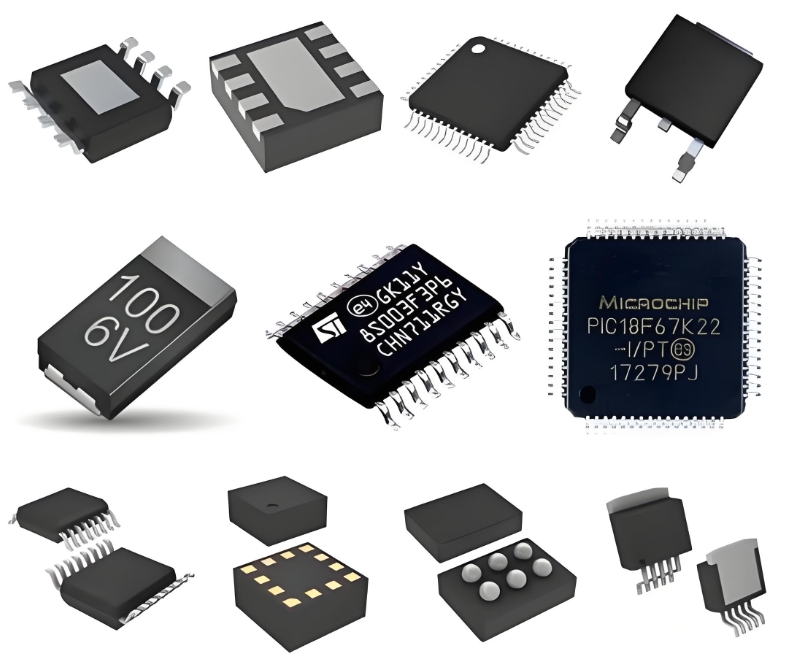
The PIC16F1519-I/MV from Microchip Technology stands as a versatile and robust member of the enhanced mid-range PIC16F family. This 8-bit microcontroller (MCU), housed in a compact 40-pin UQFN package, is engineered to deliver a powerful blend of performance, peripheral integration, and cost-effectiveness for a wide array of embedded control applications. Its design focuses on simplifying system architecture while enhancing functionality.
Key Features and Core Architecture
At the heart of the PIC16F1519 lies an enhanced 8-bit RISC CPU core capable of operating at up to 32 MHz, achieving a performance level of 8 MIPS. It features a 28 KB self-read/write program memory (Flash) and 1024 bytes of RAM, providing ample space for complex firmware. A standout architectural feature is the Complementary Waveform Generator (CWG) and the Configurable Logic Cell (CLC), which allow for on-the-fly signal routing and logic manipulation without CPU intervention, offloading timing-critical tasks from the main processor.
The peripheral set is exceptionally rich:
Analog Capabilities: It includes a 10-bit Analog-to-Digital Converter (ADC) with up to 35 channels, two comparators, and a fixed voltage reference (FVR).
Control and Communication: It offers multiple communication interfaces like EUSART (for UART), SPI, and I2C™, making it easy to connect to sensors, displays, and other ICs.
Timing and Control: With 4 timers, including a 16-bit timer, and Capture/Compare/PWM (CCP) modules, it provides precise control for motor drives, power conversion, and signal generation.
Application Design Guide
Designing with the PIC16F1519-I/MV requires a methodical approach to leverage its full potential.
1. Power Supply and Clocking: Begin with a stable power supply, utilizing the MCU’s built-in Brown-Out Reset (BOR) and Power-on Reset (POR) for reliable operation. Choose an appropriate clock source (internal or external oscillator) based on the required accuracy and performance needs of the application.
2. Peripheral Configuration: Utilize Microchip’s MPLAB® X IDE with the MPLAB Code Configurator (MCC). This graphical tool is indispensable for initializing the complex peripherals like the CLC, CWG, and ADC, drastically reducing development time and potential configuration errors. For instance, the CLC can be configured to create a simple AND/OR gate between external interrupts and timer outputs, creating a hardware-based safety latch.
3. Analog System Design: When using the ADC, ensure a clean analog supply and reference voltage. Leverage the internal FVR for a stable reference, minimizing noise for more accurate sensor readings (e.g., thermistors, potentiometers).
4. Low-Power Management: For battery-powered applications, exploit the MCU’s multiple sleep modes (Idle, Sleep). Use the Watchdog Timer (WDT) and the fail-safe clock monitor for added security. Peripherals like the timer can often run without the core being active, allowing for background operation at minimal power draw.
5. Firmware Structure: Develop a clear firmware architecture. Use interrupts to handle peripheral events (e.g., ADC conversion complete, UART data received) efficiently, allowing the main loop to focus on core control logic and decision-making.
Target Applications
Its feature set makes the PIC16F1519-I/MV ideal for:
Motor Control: Brushed DC and stepper motor control using its dedicated PWM and CLC modules.
Consumer Electronics: Smart appliances, power supplies, and user interface control.
Automotive: Body electronics, sensors, and lighting control.
Industrial: System monitoring, sensor nodes, and button/switch interfacing.
The PIC16F1519-I/MV is a highly integrated and flexible 8-bit microcontroller that excels in applications requiring sophisticated peripheral control and signal interfacing. Its combination of core independent peripherals (CIPs) like the CLC and CWG, extensive analog features, and a powerful development ecosystem makes it a superior choice for designers aiming to create efficient, reliable, and innovative embedded systems with a reduced component count and accelerated time-to-market.
Keywords: PIC16F1519, 8-bit Microcontroller, Core Independent Peripherals (CIP), Configurable Logic Cell (CLC), Embedded Control.

