
Intel EPM1270GF256I5N: A Comprehensive Guide to the MAX II CPLD Family
The Intel (formerly Altera) EPM1270GF256I5N stands as a prominent member of the MAX II Complex Programmable Logic Device (CPLD) family. This device exemplifies a significant architectural shift from traditional CPLDs, blending high density with low power consumption and cost-effectiveness, making it ideal for a wide array of control and interface applications.
Architectural Innovation: The MAX II Difference
Unlike its predecessors that used traditional macrocell-based architectures, the MAX II family, including the EPM1270, is built on a look-up table (LUT)-based architecture. This fundamental change allows the devices to offer a significantly higher logic density—up to 2,210 logic elements (LEs) for the EPM1270—while consuming a fraction of the power. This architecture is more akin to an FPGA but retains the non-volatility, instant-on capability, and simple design cycle of a classic CPLD.
Key Features of the EPM1270GF256I5N
The specific part number provides detailed information about the device:
EPM1270: Denotes the largest member of the MAX II family, featuring 1,270 equivalent macrocells or 2,210 LEs.
G: Indiates a RoHS-compliant, lead-free package.
F256: Specifies a FineLine BGA package with 256 pins.
I5: Represents the industrial-grade temperature range (-40°C to 100°C).
N: Identifies it as a standard-speed grade device.
Its standout features include:
Ultra-Low Power Consumption: A fraction of the power of previous generations, often under 100 µW in standby mode, is critical for portable and battery-operated systems.
High Density: The substantial logic capacity allows it to consolidate numerous glue logic functions, simple data processing, and I/O expansion into a single chip.
Non-Volatile Memory: The configuration is stored on-chip in flash memory, enabling instant-on operation upon power-up without requiring an external boot PROM.
User Flash Memory (UFM): A dedicated 8 Kbit flash memory block is available for storing user-defined data, such as system parameters or serial numbers.
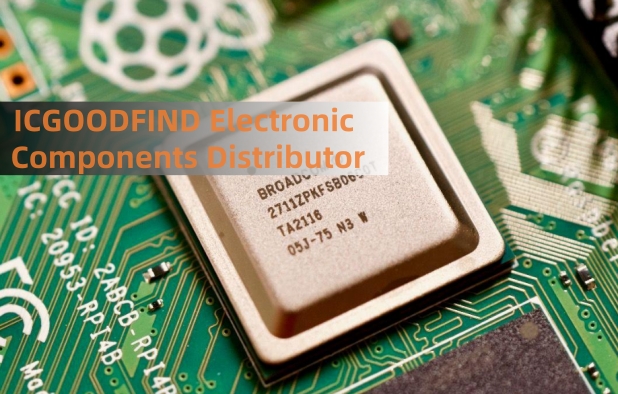
I/O Capabilities: With up to 212 user I/O pins, it supports various single-ended I/O standards (LVTTL, LVCMOS, PCI) and features hot-socketing and multi-voltage support.
Typical Applications
The EPM1270GF256I5N is exceptionally versatile. Common applications include:
System Interface and Control: Replacing multiple discrete logic ICs (glue logic) for address decoding, bus interfacing, and state machine control.
I/O Expansion: Bridging a microprocessor to a wider array of peripherals.
Serial Protocol Bridging: Implementing interfaces like I2C, SPI, and UART.
Power-On Sequencing and System Configuration: Managing the startup sequence for complex PCBs.
Consumer, Industrial, and Communications Control: Used anywhere a low-cost, reliable programmable logic controller is needed.
Design and Development
Development for the EPM1270 is streamlined using the Quartus II Prime software (or the legacy Quartus II Web Edition). Designers use Hardware Description Languages (HDLs) like VHDL or Verilog, followed by simulation, synthesis, and place-and-route. The final configuration file is then programmed onto the CPLD via a JTAG interface.
The Intel EPM1270GF256I5N is a highly integrated and power-efficient solution that successfully bridges the gap between traditional CPLDs and FPGAs. Its innovative LUT-based architecture, non-volatile storage, and substantial logic capacity make it an excellent choice for designers seeking to simplify board design, reduce component count, and lower overall system power and cost. It remains a relevant and powerful component for a vast range of control-oriented design challenges.
Keywords:
1. CPLD (Complex Programmable Logic Device)
2. LUT-Based Architecture
3. Ultra-Low Power
4. Instant-On
5. User Flash Memory (UFM)

